
- > Dune Awakening Ruins of Tsimpo Guide: A Veteran Player’s Deep Dive
- > Dune: Awakening Patch 1.3.10.0 Guide (Full Breakdown for Players)
- > Dune: Awakening Patch 1.2.10.0 – All Major Changes and Features Explained
- > Dune Awakening Lost Harvest – Everything You Need to Know About the First DLC
- > Particulate Filter Dune Awakening – How to Get, Craft, and Use It
- > Dune Awakening Dunewatcher Guide – How to Get, Craft, and Master This Legendary Rifle
Dune Awakening Silicone Blocks – How to Craft, Farm, and Use This Vital Resource
Suppose you’ve been playing Dune Awakening long enough to move past the basic gathering phase. In that case, you’ve probably already discovered that progress comes down to refining scarce materials into even rarer ones. And let’s be honest—nothing feels quite as satisfying (or frustrating) as finally getting your hands on a stack of Silicone Blocks.
When I first started, I underestimated how essential Silicone Blocks would be later on. But as you unlock more recipes and start pushing into advanced tech trees, you’ll quickly realize these blocks are the backbone of almost every serious crafting project.
In this guide, I’ll walk you step by step through everything you need to know about Silicone Blocks in Dune Awakening—where to find the materials, how to craft them efficiently, and what you’ll use them for. Whether you’re a solo wanderer grinding away in the deep desert or part of a larger guild aiming to dominate the economy, this info will save you hours of trial and error.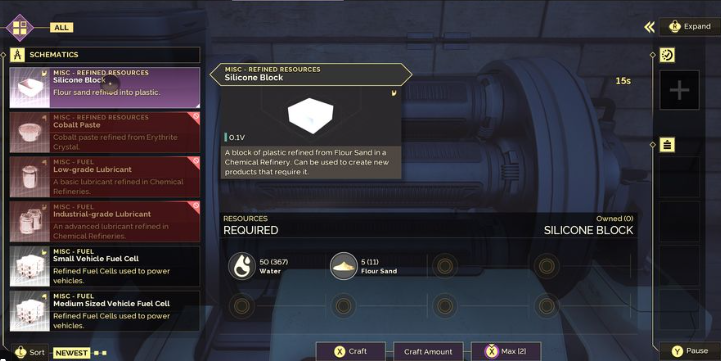
What Are Silicone Blocks in Dune Awakening?
Let’s start with the basics. Silicone Blocks are a refined resource that you’ll end up needing for all sorts of mid- to late-game equipment, including water management devices like the Dew Reaper, base upgrades like Windtraps, and crafting tools for higher-tier metals.
If you’re still in the early hours, it’s easy to overlook them. But trust me—once you start unlocking the Iron and Steel branches in your research tree, the demand for Silicone Blocks skyrockets.
This is why I always recommend gathering the necessary materials and refining them in batches. Nothing kills your momentum faster than realizing you’re out of Silicone Blocks right when you’re about to build that shiny new Improved Blood Purifier or upgrade your Cisterns.
How to Get Silicone Blocks in Dune Awakening
There are essentially three primary methods for getting Silicone Blocks:
-
Crafting in a Chemical Refinery
-
Buying from the Exchange Auction House
-
Direct Trading with other players
I’ll break down each of these approaches so you can figure out what fits your playstyle best.
Crafting Silicone Blocks Yourself
Let’s be real—this is how most veteran players do it. Crafting your own Silicone Blocks gives you the most control over quality and quantity.
To start crafting, you need to build a Small Chemical Refinery. This unlocks fairly early in the tech tree, and it only requires about 45 Copper to assemble using your Construction Tool.
Once you have the refinery set up at your base, you’ll need:
-
50 Water
-
5 Flour Sand
Feed these resources into the Small Chemical Refinery, and after about 15 seconds, you’ll get 1 Silicone Block.
If you’ve advanced further, you can upgrade to a Medium Chemical Refinery, which speeds up production and slightly reduces the Flour Sand requirement to 3 Flour Sand per block. That cuts the craft time down to 10 seconds per block, which adds up quickly when you’re processing in bulk.
One thing to note—many new players assume the hydration meter on your HUD indicates your stored water. It doesn’t. That bar shows your personal hydration level. The actual crafting water needs to be collected, stored in literjons or cisterns, and manually loaded into your refinery.
Buying Silicone Blocks from the Exchange Auction House
If you’re not in the mood to farm Flour Sand or collect water yourself, you can always buy Silicone Blocks from the Exchange. The Exchange is essentially the in-game marketplace where players list their excess resources. You’ll find them in social hubs like Arrakeen and Harko Village.
The upside here is obvious—instant access to Silicone Blocks without the grind. The downside is price and availability. Dune Awakening has a dynamic economy driven entirely by what other players are willing to sell. Sometimes, you’ll find Silicone Blocks cheap because someone flooded the market. Other times, you’ll check the listings and see prices that feel like daylight robbery.
That’s why I recommend keeping an eye on the market regularly and buying when prices dip. If you’re flush with Solari, this can be a great way to stay stocked without spending hours refining materials.
Trading Silicone Blocks Directly with Players
Lastly, you can cut out the Exchange altogether and trade directly with other players. This is often the most cost-effective approach if you’re in an active guild or have reliable trading partners.
Be cautious, though. If you’re trading with strangers, avoid PvP zones like Shipwrecks and the deeper sections of the desert. Trade somewhere safe—ideally in or near a protected hub. Even though scams and ambushes are rare, they do happen.
How to Farm the Ingredients Efficiently
The reason so many players struggle to keep up with Silicone Block demand isn’t the refining itself—it’s gathering the raw materials.
Here’s how I approach each ingredient:
Farming Water
There are countless ways to collect water in Dune Awakening:
-
Dew Reapers on Primroses – This is probably the most reliable passive method.
-
Purifying Blood – A little morbid, but effective.
-
Salvaging Cisterns and other storage units – Great if you find them during exploration.
No matter how you get your water, always store it in a literjon or cistern to avoid confusion later.
Farming Flour Sand
This is where things get more intense. Flour Sand is notorious because it’s usually surrounded by Drum Sand, which practically guarantees you’ll attract a sandworm if you stand around too long.
The fastest and safest way to farm Flour Sand is to use the Static Compactor, which you unlock after the Second Trial of Aql. This tool pulls the sand to the surface quickly, but it’s loud—so have a fast vehicle ready to make your escape.
For a detailed breakdown, check out my Flour Sand guide, but here’s the short version:
-
Look for white dust clouds, especially in the Vermillius Gap.
-
Park your bike facing a safe retreat path.
-
Use the Static Compactor sparingly—only harvest what you really need.
-
Escape the instant you hear the worm breach warning.
Farming Flour Sand feels like an ordeal at first, but with practice, you’ll develop a rhythm.
How to Use Silicone Blocks
Once you’ve built up a stash, you’ll start to see just how many recipes require Silicone Blocks. Here are some of the main things you’ll need them for:
-
Dew Reaper – Essential for collecting water passively.
-
Improved Blood Purifier – Lets you generate water and avoid dehydration.
-
Windtraps – Another critical tool for moisture farming.
-
Cisterns – Larger water storage for your base.
Basically, if your goal is sustainable survival and large-scale production, you’re going to burn through a lot of Silicone Blocks. That’s why I always recommend crafting them in bulk whenever you can.
Pro Tips for Mastering Silicone Block Production
Over time, I’ve picked up a few habits that make the process much smoother:
-
Batch Crafting Is King – Always queue up as many blocks as you can to save time.
-
Keep Extra Refineries – Having a second or third Chemical Refinery lets you process multiple stacks simultaneously.
-
Stockpile Water and Flour Sand – Never assume you have enough; gather whenever you have downtime.
-
Monitor Exchange Prices – Buying when prices drop is cheaper than emergency farming during a crafting crunch.
Should You Buy Silicone Blocks or Craft Them?
I get this question a lot, especially from newer players. My answer? It depends on your goals and time.
If you’re focused on progression and don’t mind spending a little Solari, buying from the Exchange is perfectly fine. But if you enjoy gathering and want to save currency for other priorities—like vehicles or premium crafting blueprints—it’s worth investing time to learn how to produce your own Silicone Blocks efficiently.
And if you ever decide you want to shortcut the process entirely, you can always stock up on Solari safely from reputable trading platforms like G4MMO, though be mindful to follow the game’s terms of service.
Wrapping Up – Silicone Blocks Are a Cornerstone of Progress
Mastering Silicone Block crafting in Dune Awakening isn’t just about having better tools—it’s about understanding how the entire resource chain connects. You’ll find that each trip into the desert, every stack of Flour Sand you haul back, and every liter of purified water you collect all feed into this one process.
Once you’ve got your refineries humming and your storage full, you’ll feel the payoff in every upgrade and every new machine you build. That’s what makes this game so rewarding—turning the harsh, unforgiving desert into something you can not only survive in but thrive in.
So get out there, gather smart, and remember—success in Dune Awakening comes to those willing to plan ahead, take a few risks, and always respect the sands.
Recommended Article


 Email
Email Discord