
- > Dune: Awakening Patch 1.3.10.0 Guide (Full Breakdown for Players)
- > Dune: Awakening Patch 1.2.10.0 – All Major Changes and Features Explained
- > Dune Awakening Lost Harvest – Everything You Need to Know About the First DLC
- > Particulate Filter Dune Awakening – How to Get, Craft, and Use It
- > Dune Awakening Dunewatcher Guide – How to Get, Craft, and Master This Legendary Rifle
- > Dune Awakening The Ancient Way Guide: How to Unlock and Master This Legendary Weapon
Dune Awakening Ruins of Tsimpo Guide: A Veteran Player’s Deep Dive
If you’ve been grinding your way through Dune Awakening lately, you already know Patch 1.3.10.0 didn’t just add content it dropped one of the most atmospheric locations in the game. The Ruins of Tsimpo isn’t just another stop on the overland map. It’s a place that actually makes you slow down, look around, and feel the weight of Arrakis.
I’ve spent a fair amount of time running contracts here, testing routes, and digging into the lore, and honestly this is one of the few locations that truly captures what makes Dune Awakening special.
In this guide, we’ll break down everything you need to know about the Dune Awakening Ruins of Tsimpo, from gameplay mechanics and missions to hidden lore and survival tips.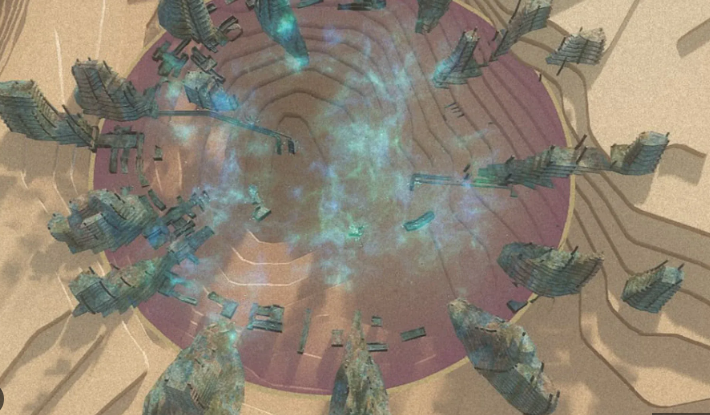
What Is the Ruins of Tsimpo in Dune Awakening
The Ruins of Tsimpo is a haunted overland location introduced in the March 25, 2026 update. It used to be a strategically important village during the War of Assassins. That is, until House Harkonnen wiped it out and blamed House Atreides.
Yeah, classic politics on Arrakis.
Now what remains is a broken, dust-covered graveyard filled with abandoned machinery, execution notices, and some seriously unsettling environmental storytelling.
Quick Overview
| Category | Details |
|---|---|
| Location Name | Ruins of Tsimpo |
| Update | Patch 1.3.10.0 |
| Main Activities | Landsraad missions, exploration, combat |
| Unique Feature | Ghost mechanics and projection enemies |
| Difficulty Level | Medium to high |
| Best For | Story lovers and immersive gameplay |
First Impressions: Why Tsimpo Hits Different
Let me be real. Most overland zones in Dune Awakening are efficient. You go in, grab your objective, and get out.
Tsimpo is different.
The moment you step in, visibility drops. Dust fills the air. The sound design kicks in with creaking metal and distant movement. It’s quiet in a way that feels wrong.
And then you start noticing things.
Bodies hanging from structures
Execution orders signed by Rabban
Abandoned gun emplacements
This isn’t just a loot zone. It’s storytelling through gameplay, and it actually rewards players who take their time.
Dune Awakening Ruins of Tsimpo Missions Explained
One of the biggest reasons to visit the Ruins of Tsimpo is the new Landsraad missions. There are five repeatable missions tied to different specializations, and they add solid replay value.
1. The Doom of Tsimpo
This is your main gathering-focused questline.
You’ll be searching through old gun emplacements and military remains to uncover evidence of forbidden weapons. Expect a lot of scanning, climbing, and careful navigation.
Pro tip from experience
Always carry a hand scanner. I know it feels like a wasted slot, but in Tsimpo it saves you a ton of backtracking.
2. Ghosts of Tsimpo
This is where things get spicy.
You’ll be fighting hostile forces referred to as ghosts. At first, it feels like standard combat, but the twist is that not everything you see is real.
Some enemies behave like projections. Others leave actual bodies.
It keeps you guessing, and that uncertainty makes every fight more intense.
3. Sabotage and Investigation Missions
These are where the story really shines.
You’ll get choices like copying or deleting logs, and those decisions can actually affect how the mission plays out. Some players have reported different enemy behavior depending on their choices.
That kind of depth is rare in a survival sandbox, and it’s a big win for immersion.
The Ghost Mechanic: What’s Really Going On
Let’s talk about the ghosts, because this is one of the coolest mechanics in the Dune Awakening Ruins of Tsimpo.
At first, you might think it’s supernatural. But as you dig deeper into the missions, it becomes clear there’s more going on.
What We Know
- Some ghosts are projection-based decoys
- Others are real enemies using advanced tech
- Survivors may still be hiding in the ruins
- Solido projection technology is likely involved
This adds a psychological layer to combat. You can’t just rush in guns blazing. You need to observe, adapt, and sometimes just trust your instincts.
Exploration and Verticality Tips
Tsimpo is not a flat zone. Verticality plays a huge role here, and if you ignore it, you’re going to struggle.
Movement Strategies
- Use shigawire for quick elevation changes
- Combine suspensor jumps with wire for distance
- Learn the intended paths before speedrunning
I’ve seen a lot of players try to rush this area and fail hard. The best approach is to explore slowly on your first few runs. Once you understand the layout, then you can optimize your routes.
Survival Tips for Ruins of Tsimpo
Even experienced players can get caught off guard here. The environment itself is part of the challenge.
1. Visibility Is Your Enemy
Dust storms and low visibility mean you’ll often spot enemies late. Move carefully and avoid unnecessary fights.
2. Heat Still Matters
Even with the sun partially blocked, you can still get heat effects. Stay hydrated and manage your exposure.
3. Inventory Management
Some missions require specific tools like scanners. Plan your loadout before entering.
4. Combat Awareness
Not every enemy is real. Don’t waste ammo blindly. Observe behavior patterns first.
Lore Breakdown: The Tragedy of Tsimpo
This is where the Ruins of Tsimpo really shines.
The story isn’t told through cutscenes. It’s scattered across the environment, missions, and player choices.
Key Lore Points
- House Harkonnen orchestrated the massacre
- Evidence was manipulated to blame Atreides
- Forbidden artillery was used
- Civilians were the primary victims
This isn’t just faction conflict. It’s a reminder of how brutal the War of Assassins really was.
And honestly, it hits harder than most questlines in the game.
Is Tsimpo Worth Farming
Let’s be honest. Not every great location is worth repeating endlessly.
Pros
- Unique atmosphere
- Strong lore and immersion
- Good XP from missions
- Varied gameplay mechanics
Cons
- Missions can feel long
- Requires specific tools
- Not ideal for quick farming runs
If you’re looking for efficiency, there are better spots. But if you want a memorable experience, Tsimpo is absolutely worth your time.
Veteran Player Take: What Tsimpo Means for Dune Awakening
After dozens of hours in Dune Awakening, I can say this confidently.
The Ruins of Tsimpo is a glimpse of what the game can become.
It combines survival, storytelling, and player choice in a way that feels natural. It doesn’t rely on repetitive quest loops alone. Instead, it creates an experience.
And that’s something the game needs more of.
Final Thoughts
The Dune Awakening Ruins of Tsimpo isn’t just another update location. It’s one of the most immersive zones currently in the game.
It rewards exploration
It challenges your expectations
It tells a story without forcing it
If you haven’t taken the time to walk through it slowly, do it. Don’t just rush objectives. This is one of those rare places where the journey matters more than the reward.
And if you’re planning to grind efficiently later, having extra resources like Dune Awakening Solari can help you focus more on exploration instead of farming. Some players also turn to G4mmo to save time, but honestly, Tsimpo is one area you don’t want to rush through.
Recommended Article


 Email
Email Discord